


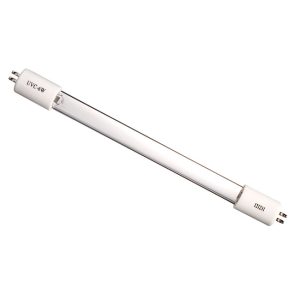
Let’s talk about our 120W/cm Mercury UV Lamps
When we build our standard mercury UV lamps, we aim for a power density of 120W/cm. Why? Because that’s the sweet spot for most industrial curing lines. It gives you enough punch to get those inks and coatings to set properly without accidentally frying your substrate.
The power and the heat
Here is the deal: 120W/cm means we’re packing a lot of electrical energy into a very small space. Inside the lamp, a plasma discharge creates a strong peak at 254nm, along with some extra UVC and UVB. The result is a broad output. It’s powerful. It digs deeper into thick coatings than what you’d get from an LED. But there’s a catch. All that power creates a lot of heat. You’ll need to make sure your cooling fans or water jackets are actually up to the task. If your exhaust system can’t keep up, you’re looking at a lamp that burns out way too early—or worse, a warped conveyor belt.
How we make them (and why it saves you money)
We handle everything ourselves. We source the quartz tubes, we assemble the electrodes, the whole works. By cutting out the middlemen, we keep the costs down for you. We also use high-purity fused quartz. It’s a small detail, but it matters. It stops the glass from yellowing when things get intense under the UV stress. Plus, these are designed to be simple drop-in replacements. We keep the tolerances tight. That means when you swap a lamp, you don’t have to spend your afternoon rewiring ballasts or fiddling with lamp holders. You just pop it in and get back to work.
The trade-offs
These lamps are absolute workhorses, especially for PET curing and automotive coatings. They provide the raw power you need to keep your production lines moving fast. But, as I mentioned, they’re hungry for power and they run hot. To keep things running smoothly, you’ll need a stable power supply. Flickering is the enemy here. Just double-check that your voltage regulators match the lamp’s operating current so you aren’t stressing the electrodes.