


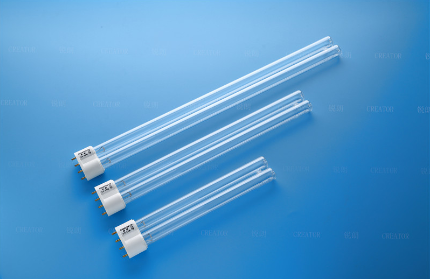
Why Gallium Iodide Lamps are the Secret Sauce for Textile Production
If you’ve ever wondered how a garment goes from a raw piece of fabric to a finished product without the prints peeling off or the coatings rubbing away, the answer is UV curing. It’s the invisible workhorse of the whole operation. Specifically, we rely on Gallium Iodide (GaI) lamps. Why? Because they hit that sweet spot in the UVA and UVB spectrums. That’s exactly what you need to trigger the chemical reaction that locks inks and coatings into the fabric.
The “Why” Behind the Physics
Here’s the thing: your standard mercury lamps usually can’t punch through heavy fabrics. They just don’t have the right wavelength to get deep into the material. By adding Gallium to the mix, we shift the light emission. This lets the UV energy dive deeper into thick ink layers or synthetic fibers. The result?**It cures faster.**Really fast. And that changes everything for your workflow because you can crank up the speed of your conveyor belts without worrying about that annoying “tacky” feel on the surface.
Getting the Hardware Right
When you’re picking out a GaI system, you’re mostly balancing power density. Sure, high-wattage tubes save space, but they get hot. Like, really hot. If you push the wattage too hard without a solid cooling manifold, you’re asking for trouble—burnt-out electrodes or warped reflectors. The good news is we design these to fit right into standard industrial housings. They basically slide in as a direct replacement for those old mercury systems. No need to rebuild your whole line.
Real-World Use on the Shop Floor
On a typical day, these lamps handle the heavy lifting in three main areas: *Ink Curing: It sets screen-printed designs the second they pass under the light. *Coating Fixation: This is how waterproof or flame-retardant chemicals actually bond to the weave. *Sterilization: Cleaning organic gunk off raw fibers before they hit the line. But there is a trade-off. GaI lamps don’t last as long as the basic UV bulbs. You’ve got to keep a close eye on your run-time. If you let the hours slip, the curing intensity drops, and that’s when you start seeing prints peel. Also, do yourself a favor and wire them to a stabilized power supply. Voltage spikes are the fastest way to kill the arc and ruin your day.